Diamonds can now be created in controlled environments using advanced technology. These stones share the same crystal structure as mined ones. They are not substitutes or imitations. They are diamonds.
You will often hear them called lab grown or synthetic. The most accurate description is that they are grown rather than extracted. The process recreates the conditions that form diamonds underground. Pressure heat and time are applied with precision.
There are two main methods. One uses high pressure and high temperature. The other uses chemical vapor deposition. Both produce stones that can be cut polished and graded the same way as any other diamond.
When you look at one with your eye you cannot see a difference. Even trained gemologists need specialized equipment to identify origin.
Table of Contents
Why origin matters to you
Origin affects more than just the story behind the stone. It affects price availability and consistency.
Because growth happens in a controlled setting supply is more predictable. This reduces cost volatility. You can compare stones more easily since quality ranges are tighter.
You also gain access to shapes and sizes that are harder to find in mined supply. This matters when you have a specific design in mind.
If your priority is transparency you may also value knowing exactly where and how the stone was made.
Shape advantages start with the rough
Every diamond begins as a rough crystal. The shape of that rough limits what cutters can do.
Lab grown rough is created with purpose. This allows cutters to plan for specific shapes from the start. Less material is wasted. Proportions are easier to control.
This is where shape advantages become practical.
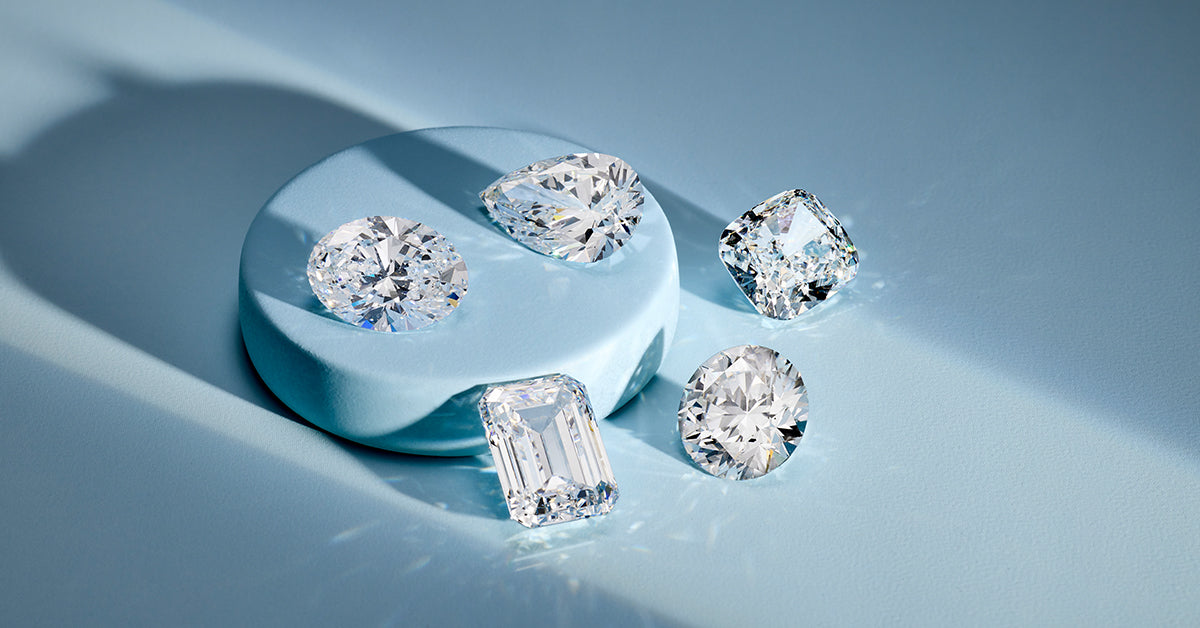
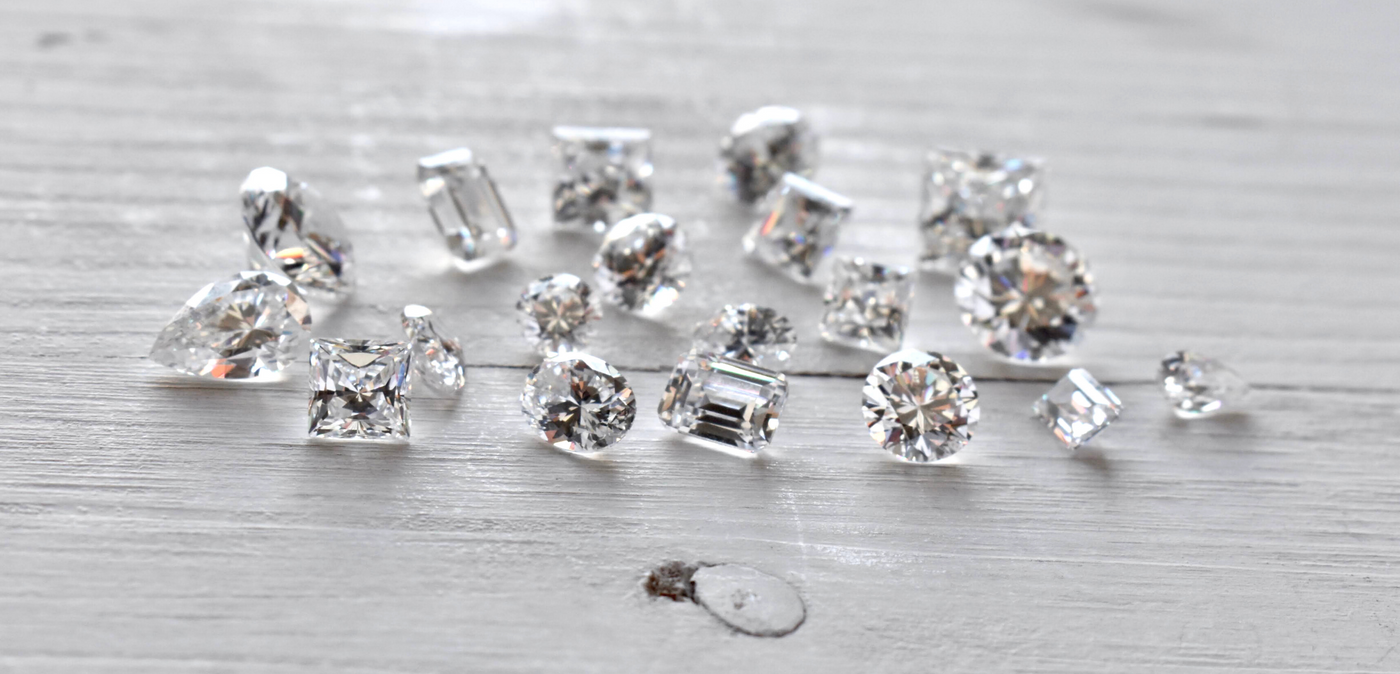
Round shapes benefit from consistent symmetry. Fancy shapes like oval pear or emerald benefit from cleaner outlines and better yield.
You get more usable surface area for the same carat weight. That means a larger face up appearance on the finger.
Common shape benefits you should know
- Round shapes offer the strongest light return when well cut
- Oval and pear shapes look larger for the same weight
- Emerald and asscher shapes highlight clarity and structure
- Radiant and cushion shapes balance sparkle and geometry
Example
A one carat oval will often look bigger than a one carat round when viewed from above.
Cost differences are not accidental
Price is influenced by cutting loss. Ventajas de formas de diamantes waste more rough. Fancy shapes waste less.
With lab grown production this difference becomes clearer. You are not paying for scarcity in the same way. You are paying for cutting choices and finish quality.
If you want visual impact without increasing budget shape choice is your main lever.
This is one of the strongest practical arguments for man made diamonds when shape flexibility matters. That phrase applies here because manufacturing allows shape driven planning rather than compromise.
Clarity and color behave differently by shape
Some shapes hide inclusions better. Others show them clearly.
Brilliant styles like round and cushion scatter light. This masks small internal features. Step cuts like emerald and baguette act like windows. They reveal everything.
Color works the same way. Elongated shapes can show color concentration at the tips. Square shapes distribute color more evenly.
This means you can adjust clarity and color grades based on shape. You do not need the same specifications for every design.
Example
You may choose a VS clarity for an emerald cut but an SI clarity for a round with no visible difference.
Durability is a shape decision
Durability depends on edge structure.
Sharp corners are vulnerable. Points can chip if unprotected. This is not a theory. It happens in daily wear.
Shapes like round oval and cushion have no sharp corners. They perform well over time. Princess pear and marquise shapes need protective settings.
When choosing a shape think about how you live.
Do you work with your hands
Do you wear rings every day
Do you want minimal maintenance
Your answers matter more than trends.
Design freedom and setting compatibility
Lab grown supply makes matching stones easier. This matters for earrings bands and multi stone designs.
You can request pairs with the same dimensions. You can source calibrated sizes. This simplifies design and reduces cost.
Certain shapes work better in certain settings.
- Rounds fit almost every setting style
- Ovals elongate the finger in simple solitaires
- Emerald cuts suit clean metal lines
- Halo settings protect pointed shapes
Because availability is higher you can refine details without waiting months.
This is another practical edge of man made diamonds when you care about design precision.
Grading still matters
Do not assume all lab grown stones are equal.
Cut quality remains critical. Poor cut ruins light performance. This applies to every shape.
Look at proportions polish and symmetry. Ask for grading reports from recognized labs.
You should evaluate stones the same way you would any diamond. The origin does not replace quality standards.
Who benefits most from choosing this path
You benefit if you want control. You benefit if you compare options carefully. You benefit if shape performance matters more than resale mythology.
If you want a specific look within a fixed budget this approach gives you leverage.
If you want to understand advantages rather than follow assumptions this category makes sense.
That is why man made diamonds are often chosen by buyers who focus on outcome rather than tradition.
Questions people usually ask
Do lab grown diamonds last as long
Yes. They share the same hardness and structure. Longevity depends on cut shape and setting.
Can I choose a lower clarity grade safely
Yes if the shape hides inclusions. Brilliant styles allow more flexibility than step cuts.
Are all shapes priced the same
No. Cutting loss and demand affect price. Elongated shapes usually offer better value.